
Featured Story

One-time gene therapy transforms Sriansh’s future

When Sriansh was just three months old, his family grew concerned as he slept most of the day, arched his back, and could not control his eye movement. His parents brought him to Cincinnati Children’s, where he was diagnosed with AADC deficiency, a rare genetic disorder that disrupts dopamine and serotonin production in the brain. Sriansh’s family was told he might never walk, talk, or lift his head. But thanks to an experimental gene therapy clinical trial, his story took a groundbreaking turn. At just 16 months old, Sriansh became the youngest child in the world to receive one-time gene therapy treatment, delivered directly into the brain through a minimally invasive surgical technique. His care team inserted an engineered virus carrying the missing gene, allowing his brain to begin producing the essential chemicals it lacked. Today, Sriansh is walking, running, and thriving because of this innovative clinical trial. This pioneering work helped lead to the first-ever FDA-approved gene therapy administered directly to the brain, offering hope for patients with rare genetic diseases once thought untreatable. 

All Stories

Hospital
Type of Care
Health Condition
Showing 1 stories

Dedicated care team helps Roman through heart transplant and cancer diagnosis

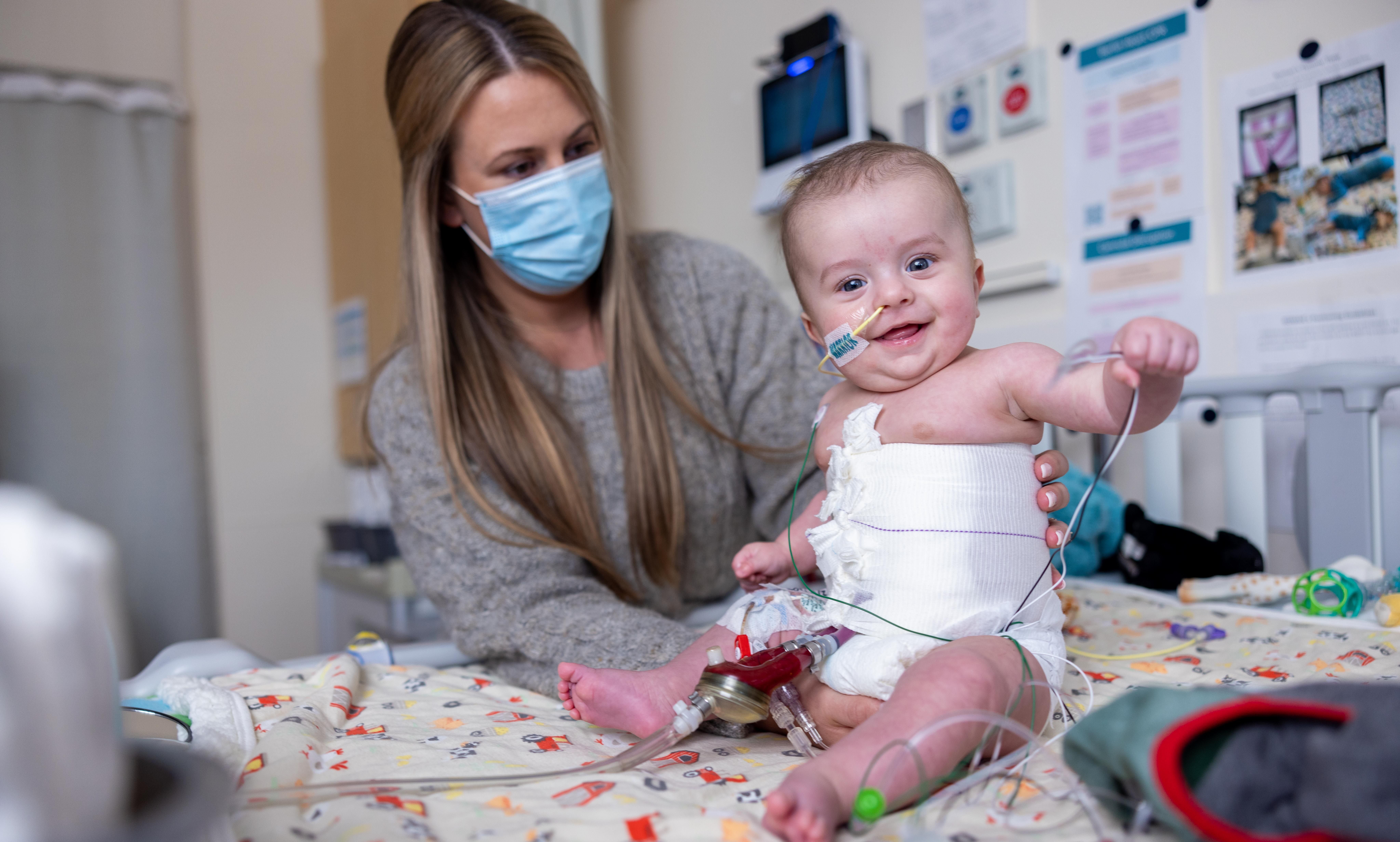
Ashley was in for a routine ultrasound when she learned her baby Roman had one of the most extreme cases of dilated cardiomyopathies doctors had ever seen in a fetus. A few weeks later, Roman was delivered at the University of Michigan Health C.S. Mott Children’s Hospital and was quickly placed on a ventricular assist device (VAD) as the care team discussed a long-term solution. His heart was too weak, and a heart transplant was the best path forward. After nearly six months on the transplant list, Roman received a heart. Roman’s transplant went well but as he and his family were settling in back home, Roman had to be readmitted to the hospital for a bad cold, given his immunocompromised status. Doctors found that Roman had post-transplant lymphoma, a common reaction to the anti-rejection medication taken after his transplant. He underwent a six-course treatment of two medications, and after four weeks, there was no detection of cancer! Now in remission, Roman is thriving and loving toddlerhood.

Read more